Fish are complex sentient beings. Let’s stop fishing, end their suffering, and choose smart alternatives for a better planet.
Author: Priyanka Kolvekar
Humans do not have a lot of concern for fish as we feel fish don’t have a sense of consciousness. But, they do have natural intelligence, feelings, a sense of fear, defend their family, and have hierarchical structures, just like land animals, fish are also complex sentient beings. They have a nervous system and fear threats and navigate thousands of miles in deep water using their senses/judgment and defend their habitats and families, they are playful and have social communities and structures and hierarchies. Why are we ignoring their sentiments and being the cause of their slaughter? The number of fish being slaughtered amounts to 40 times more than that of animal slaughter (Chickens, goats, cows, and pigs) which is approximately 2.5 lakh crores. People deploy very cruel methods to fish. A few of them are:
- Hooks: tangled to its mouth to pull them out painfully
- Long line fishing: (hooks are fixed to a string running for 50 to hundred kilometers. The fishes tangled to these hooks have to travel for long hours in the line that string travels. This process creates ruptures inside the fish’s mouth)
- For bigger fish: mankind uses huge hook rods and penetrate into their body and drag them into boats. How is it fair to forcefully drag the fish that is trying to fight for its life? Sometimes while removing these hooks, the mouth is totally slit and amounts to heavy bleeding, and mankind agnostic to its pain throw them into the basket to suffer.
- Gill net fishing: These nets are made of thin fibers that are rested in water for hours together. While trapped in the net tries to escape, only the head portion goes through the net holes trapping its gills and restricting the rest of the body going through. During this process, the gills get damaged, and the fishes at this time are unable to breathe and would eventually suffer a painful death.
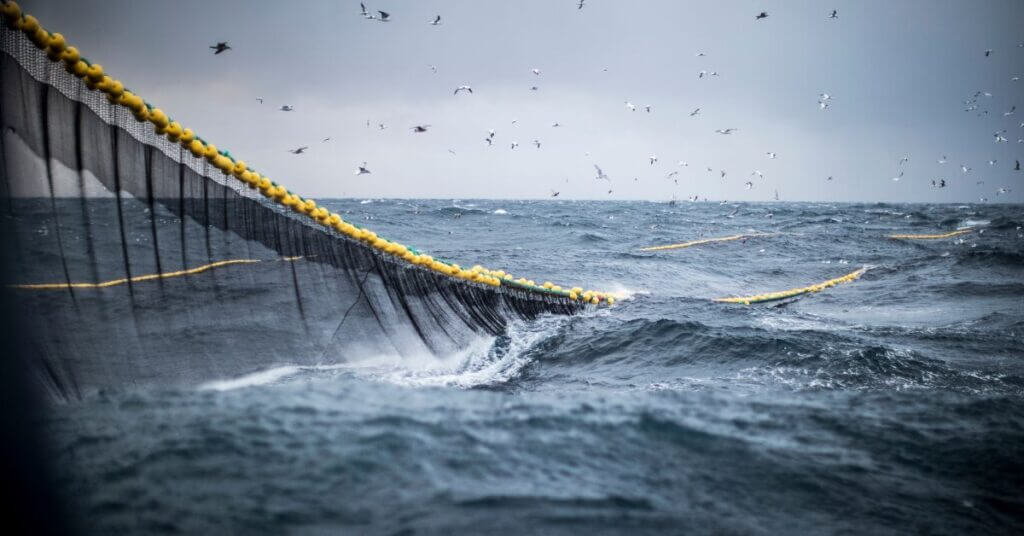
- Trawling: Weights are tied to the net in water at different levels under the boat, which drags these nets along with the boat. The fish trapped in the net try to swim in the reverse direction and would end up taking up the weight of other fish. They eventually end up rupturing the internal organs. Few live fishes, if not dead during the process, are subjected to abdomen dissection in the name of immediate processing. Some of them continue the pain for almost 30 odd minutes before they die. Other methods include drilling a hole in the head, stunned, and electrocuted. For the bigger fish to restrict their movement, they are often beaten with clubs and rods or sometimes left in the nets and vessels, and depending on the species, they suffer a painful death after 30 minutes to 4 hours of agony.
- River banks and banks: Fish nets are often dragged to be cornered and dragged to banks. These fishermen usually stampede the fish creating more suffering for them while they are being thrown for processing.
This leads to heavy biomagnification
Biomagnification: the harmful substances and toxins which transfer from one organism to another organism at tropical levels.
The human industry waste goes to the ocean, and fish consume this, in return, we consume the same fish back. Other big species also get these toxins by eating fish
Example: Bigger fish, ducks, mammals consuming fish.
50% of fish meat is from aquaculture fish farms. In these practices, the fish are restricted to enclosed ponds, tanks, vessels, and boxes. In aquaculture, 10 fish are grown in the same space that 1 fish stays in the natural habitat. Due to this, the sensory organs of fish make an impact, and this often results in bumping into other fish or walls that result in fin damage and spinal injuries. Fish release ammonia as part of their natural metabolism.
Due to space constraints, the waste and feces are left in the same water, and this increases the ammonia levels and bacteria that create unhygienic conditions for these fish that impact them mentally as well. This frustration drives them to eat others out of rage, and to avoid this, mankind introduces heavy dosages of antibiotics. Along with these, the food also contains growth hormones and stimulants to increase the amount of meat. All this is in the name of profit motives in aquaculture. Aquaculture allows fish only for the duration of their maximum growth capacity. This means that they let them survive only for 5 to 10 percent of their natural life spans.
Usually, for the fish to reproduce, they rely on many natural environmental factors, oxygen levels, light, temperature, vegetation, and so on. However, aquaculture and commercial tanks don’t have any of these resources, and hence they deploy artificial propagation. What this means is the females are subjected to many hormonal injections that improve the eggs ripening, and then they are squeezed to flush the eggs out.
During the process, the females end up dying, or their internal organs may be damaged. These eggs are then fertilized artificially using male fish sperms. In the case of fish species where the male has capability to fertilize, the heads are tilted upside down and then vigorously shaken to spill the eggs. These eggs are then transferred to incubators to fertilize. This basically means that the reproductivity is done against their will with only the sole motive of profitability with zero emotions. Because of intensive production in these farms, temperature, light, and oxygen are regulated artificially. However, in summer in an outdoor farm, they suffer increased temperatures that creates serious inconveniences for them, which is coped with by migrating to cooler regions that are restricted as well.
Due to the increased temperature, the eyes develop cataract issues that result in their blindness. However, all of these don’t matter to the farmers, they only are focused on the right weight. Sometimes they don’t grow to the expected weights as farmers expect, and due to this, the bigger fish might dominate the smaller fish and eat them. The farmers in these conditions leverage a process called grading using a series of gates and bars to segregate the fish into the respective size tanks. During this process, they are exposed to extensive stress, rupturing and damaging the protective scales of their bodies to bars and grills. If they don’t grow their potential of having deformities, they just dispose of them inhumanely as garbage to the dustbin.
Sometimes to reduce the killing costs and efforts, they leave them in ice boxes or taken out of the water and left exposed to air. Sometimes the ice gets stuck in gills, and they are parallelized. In some places, they cut gills and other body parts while they are still alive, which creates physical agony for the fish. In the name of taste and safety, sometimes shrimp, lobsters, crabs, and octopuses are boiled alive and eaten.
During this process, to get out of the boiling water and oil, these aquatic animals whip their body with all their energy, and they end up contacting the walls of the hot pan. On the other hand, in industries, these animals are subjected to electric shocks to break their shells, limbs, and heads, and all these happen when they are conscious. Where do these animals belong? To our torture? They are sentient beings and deserve better treatment. We should question our values if we are consuming meat from such a cutthroat industry.
ALTERNATIVE FOR OMEGA 3
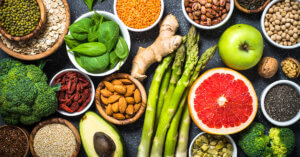
- Omega-3 is in algae the fish consumes algae, we can get plant-based omega-3
Examples: flax seeds, chia seeds, walnuts, hemp seeds.
- You can choose plant-based algae omega-3 supplement.
- The omega-3 in plants is sufficient and splits into
ALA: ALPAHA LINOLENIC ACID
EPA: EICOSAPENTAENOIC ACID
DHA: DOCOSAHEXAENOIC ACID
“Let’s end their suffering and choose smart alternatives for a better planet.”
Find your next vegan fish alternative on Vkind!
SUBSCRIBE TO OUR NEWSLETTER
Vkind Vibes is our popular weekly newsletter where we share the latest news, tastiest recipes, and hottest trends impacting the VegEconomy. SUBSCRIBE NOW!
WANT MORE?
JOIN THE VEGECONOMY Are you a vegan brand owner or professional? Add your listing to our business search platform to get more eyes on your vegan enterprise.TAKE THE VEGECONOMY PLEDGE Take the VegEconomy Pledge to show support for sustainable business practices and make a commitment to Spend Like You Give A Damn.
WATCH & LEARN Subscribe to our YouTube channel for our latest shows, live events, interviews, videos, news, secret giveaways & more!
STREAM “PEELED”, THE ALL-VEGAN COOKING COMPETITION SHOW Produced by Vkind Studios in a limited 3-part web series, Peeled is the award-winning all-vegan cooking competition show that’s on a search to find “America’s Hottest Vegan Chef”.
FOLLOW & SHARE Our content is always entertaining, educational, and inclusive. Follow us everywhere on social media!